← Back to Grangehill

The Story of Grangehill

A historic residence above the city.

Long before its next chapter as a private events residence, Grangehill stood as one of Spring Hill's distinctive historic homes — overlooking Brisbane from one of the city's most prominent ridgelines.

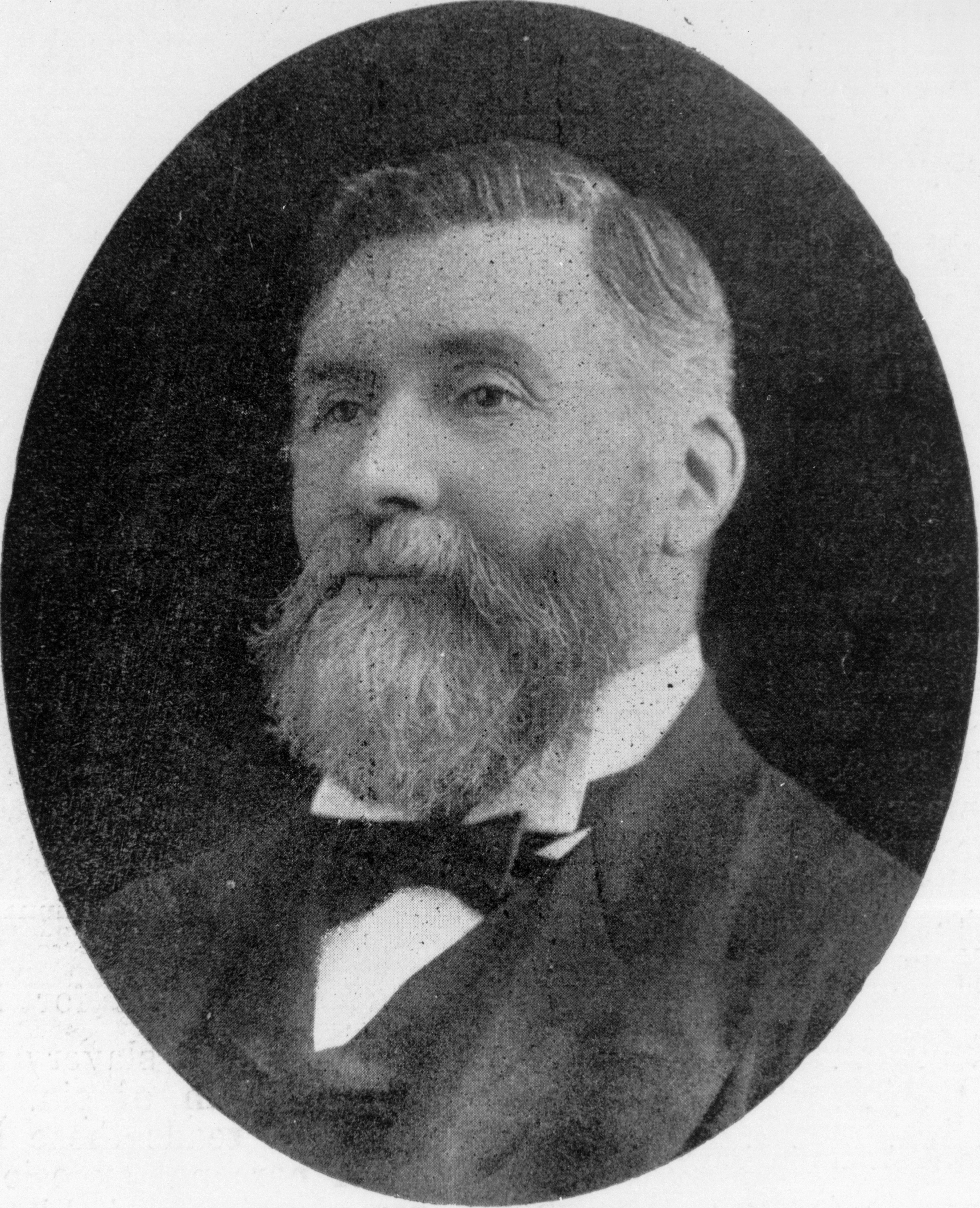
Portrait of Alexander Raff
Alexander Raff, businessman, pastoralist and later member of the Queensland Legislative Council.
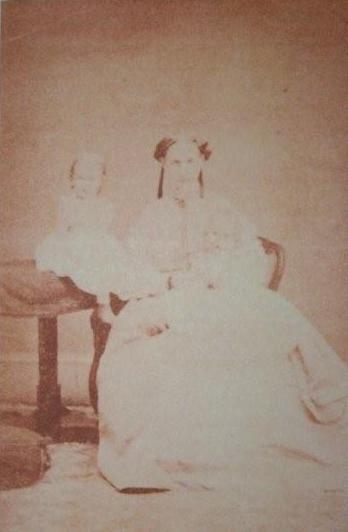
Elizabeth Millar Paterson Raff photographed circa 1869
Elizabeth Millar Paterson Raff, photographed circa 1869.

1820–1851

From Scotland to Brisbane

Alexander Raff was born in Forres, Morayshire, Scotland in 1820. He followed his elder brother George to Australia and arrived in Brisbane in 1851, at a time when the Moreton Bay settlement was beginning to grow beyond its early colonial origins.

Elizabeth Millar Paterson was born in Glasgow in 1832, the daughter of Dr James Paterson, an Army Surgeon. Educated and from a respected Scottish medical and professional family, Elizabeth brought her own distinguished background to the story of Grangehill.
1860–1864

The Creation of Grangehill

In May 1860, only months after Queensland separated from New South Wales, Alexander Raff purchased two blocks of land on what would become Gregory Terrace. In 1864, he acquired a third adjoining block, creating a substantial ridgeline estate above the growing town.

The name Grangehill appears to reach back to Scotland. In Scots usage, a grange was a farm or estate establishment, often associated with monastic or feudal lands. Intriguingly, the name Grangehill was also associated with an old estate near Forres in Morayshire, where Alexander Raff was born — a place connected with the former lands of Pluscarden Abbey and later known as part of the Dalvey estate.

The name chosen for the Brisbane residence may therefore have carried both a literal meaning — the estate on the hill — and a deeply personal memory of Scotland, transplanted to one of Brisbane’s finest ridges.

1862–1870s

A Family Home on the Ridge

Alexander married Elizabeth Millar Paterson in Sydney in June 1862. The newlyweds arrived in Brisbane aboard the Balclutha shortly afterwards, and by 1863 Grangehill was recorded as the family home upon the birth of their first child.

From its elevated position, Grangehill appears to face toward the Moreton Bay passage — the maritime approach through which ships entered the young colony. In its day, this would have made Grangehill not only a commanding residence, but a house looking out toward the routes of trade, arrival and opportunity.

1860s–1914

The Raff Family Years

The Raff family belonged to the small circle of merchants, pastoralists, financiers and civic figures who helped shape early Queensland. Alexander became involved in public institutions, business, pastoral interests, finance, education, charity and later the Queensland Legislative Council.

His brother George Raff was one of Brisbane’s prominent merchants, connected with wool, shipping, Raff’s Wharf and the Queensland Steam Navigation Company. Together, the Raff name was woven into the commercial and civic development of the new colony.

Elizabeth also became a significant figure in Brisbane’s charitable life. She was associated with the early Children’s Hospital, the Lady Bowen Hospital and Presbyterian church work, helping establish Grangehill not only as a family residence, but as a home connected with philanthropy and public service.

1880s–1890s

The House Evolves

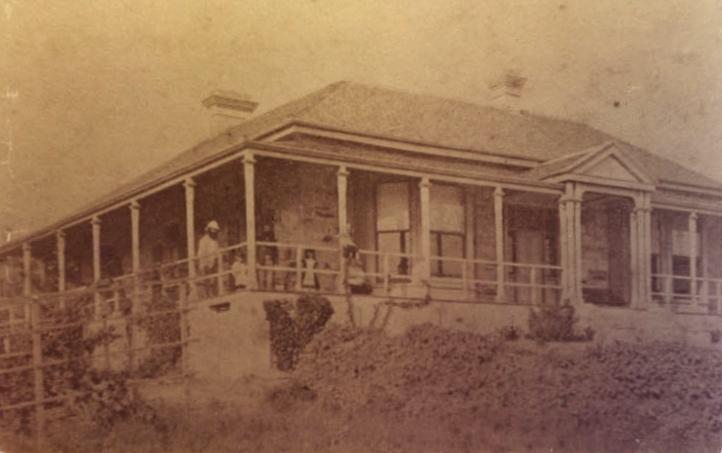
Grangehill appears to have evolved over time from an early stone residence into the grander two-storey mansion form remembered today. Later verandahs, bay windows and architectural additions gave the house the commanding presence seen in historic photographs.

Its position above Gregory Terrace made it one of the most prominent residences on the Spring Hill ridge, overlooking Fortitude Valley, Bowen Hills, Herston and the wider sweep of Brisbane’s early growth.

1914–1939

Red Cross and Royal Visit

Alexander Raff died at Grangehill in 1914. The house passed in trust to his eldest son, James Raff, who enabled the Red Cross to use it after the First World War as a convalescent home for returned and disabled soldiers.

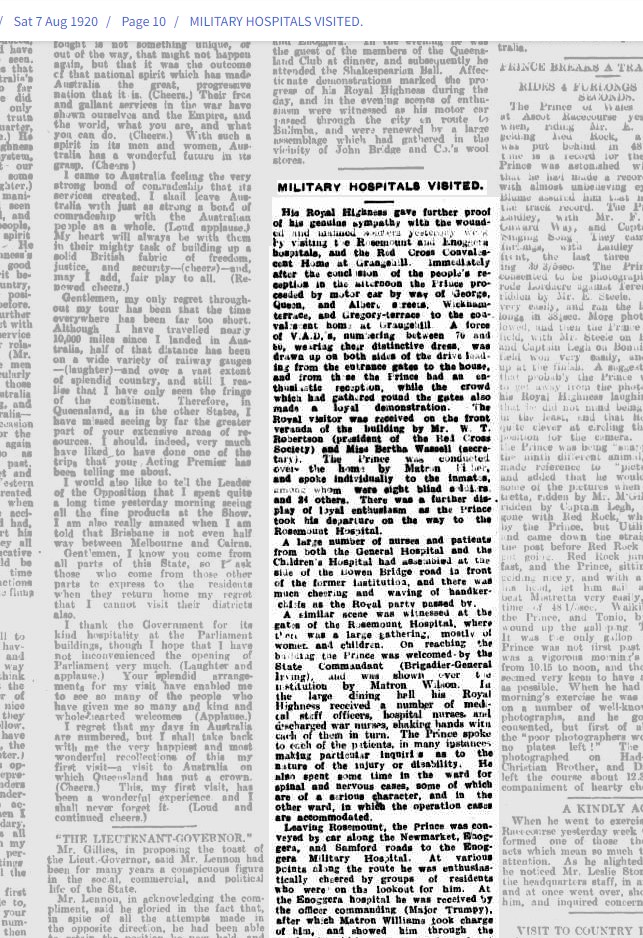
In 1918, Grangehill was one of Queensland’s Red Cross convalescent homes, with rooms converted into dormitories and recovery spaces. In 1920, during the royal visit of the Prince of Wales — later Edward VIII — returned soldiers at Grangehill were visited as part of Brisbane’s civic and military programme.

1949–1950

The Raff Family Departs

After nearly ninety years of Raff family ownership, Grangehill was offered for sale by James Cluny Raff in 1949. The sale marked the end of the family’s direct custodianship of the estate they had established in the first years of Queensland’s existence.

1950–1995

The Carmelite Years

In 1950, Grangehill was purchased by the Discalced Carmelite Fathers and became St Teresa’s Carmelite Priory and Retreat Centre. For more than forty five years, the house served as a place of religious life, retreat and reflection.

The Carmelite chapter preserved Grangehill through a long period in which many of Brisbane’s early residences disappeared, allowing the house to survive into the twenty-first century.

1995–2023

The Stoyle Stewardship

In the mid-1990s, Grangehill was purchased by Ipswich businessman Edwin Stoyle and his wife Loretta. The Stoyle family became custodians of one of Brisbane’s oldest surviving residences during a period of renewed appreciation for Queensland’s heritage buildings.

2023–Today

A New Chapter

In 2023, Grangehill entered its next chapter under new private ownership. The intention is to honour the residence’s extraordinary history while carefully reawakening it as one of Brisbane’s most distinctive private event settings.

From Scottish origins and early Queensland commerce, to wartime recovery, religious retreat and modern restoration, Grangehill remains one of Brisbane’s rare surviving founding-era mansions — a house with a story still being uncovered.

Historic photograph of Grangehill as a single-storey residence
An early image of Grangehill, showing the residence before its later evolution. c. 1870s.
Historic photograph near Grangehill and the RNA grounds
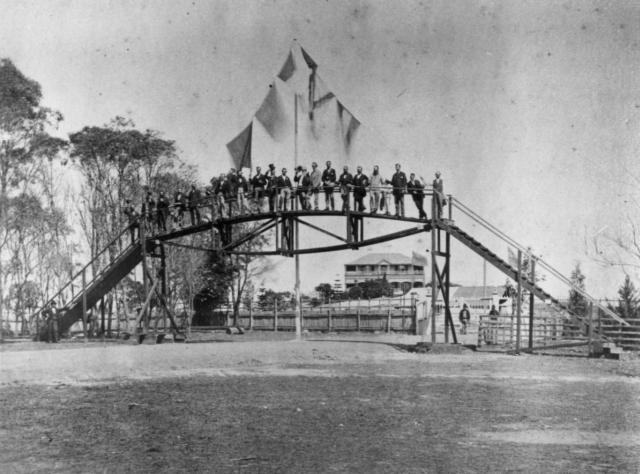
Pettigrew's Bridge, Bowen Park, August 1876. Built for Brisbane's inaugural Intercolonial Exhibition, the timber bridge was associated with prominent Brisbane timber merchant William Pettigrew. The photograph looks from the Exhibition Grounds back towards Gregory Terrace, with Grangehill visible beyond.

1920

A royal visit.

In 1920, the Prince of Wales — later Edward VIII — visited returned soldiers at Grangehill during its time connected with military hospital use. It is a remarkable chapter in the property's story, linking the residence to Brisbane's civic, military and royal history.

Newspaper article referencing the Prince of Wales visit to Grangehill
Newspaper reference to the Prince of Wales visiting military hospitals, including Grangehill.